244.5K
Downloads
152
Episodes
The podcast of the Association for Psychological Science. What does science tell us about the way we think, behave, and learn about the world around us? Under the Cortex is proudly sponsored by Macmillan Learning Psychology, where captivating content meets genuine engagement. Our authors, who are seasoned educators, understand today’s teaching challenges. We aim to craft and present both information and interactive tools that truly connect with students. Whether in-person or online, we support instructors and inspire students. Macmillan Learning Psychology: Engaging Every Student, Supporting Every Instructor, Setting New Standards for Teaching and Learning.
Episodes
Apr 27, 2022
Apr 27, 2022
7 min
The winners of the 2022 APS Janet Taylor Spence Award for Transformative Early Career Contributions represent some of the brightest and most innovative young psychological scientists in the world. In a series of mini-episodes, Under the Cortex talks with each winner about their research and goals.
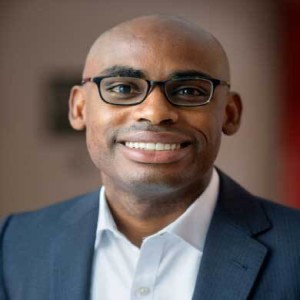
Today, Neil Lewis Jr. (Cornell University) talks about how the unequal nature of the society that we live in affects the way we think.

Apr 14, 2022
Apr 14, 2022
8 min
The winners of the 2022 APS Janet Taylor Spence Award for Transformative Early Career Contributions represent some of the brightest and most innovative young psychological scientists in the world. In a series of mini-episodes, Under the Cortex talks with each winner about their research and goals.
Today, Kai Chi (Sam) Yam (National university of Singapore) tells us about his research on human-nonhuman communication.
Learn more about our sponsor by visiting https://macmillanlearning.com/psychsessions.

Mar 30, 2022
Mar 30, 2022
15 min
New research covering tens of millions of U.S. traffic stops found that Black drivers were more likely than White drivers to be stopped by police in regions with a more racially biased White population. Pierce Ekstrom, a researcher at the University of Nebraska and lead author on one of two concurrent papers in the journal Psychological Science talks about how these studies shed new light on how countywide attitudes toward race correlate with local policing. Read the news release and watch the video segment here.
Mar 29, 2022
Mar 29, 2022
9 min
The winners of the 2022 APS Janet Taylor Spence Award for Transformative Early Career Contributions represent some of the brightest and most innovative young psychological scientists in the world. In a series of mini-episodes, Under the Cortex talks with each winner about their research and goals.
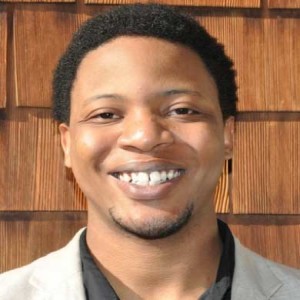
Today, Jason Okonofua (University of California, Berkeley) tells us about his research on empathy and social-psychological processes that contribute to inequality.
Mar 22, 2022
Mar 22, 2022
6 min
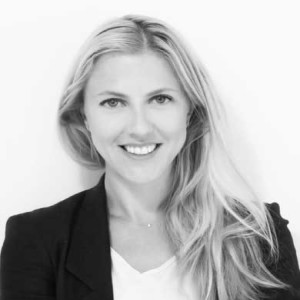
The winners of the 2022 APS Janet Taylor Spence Award represent some of the brightest and most innovative young psychological scientists in the world. In a series of mini-episodes, Under the Cortex talks with each winner about their research and goals.
Today Oriel FeldmanHall (Brown University) tells us about her research to disentangle the cognitive and neural processes behind the complex choices that form the basis of human social behavior.
Mar 18, 2022
Mar 18, 2022
7 min
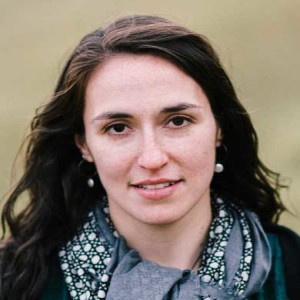
The winners of the 2022 APS Spence Award represent some of the brightest and most innovative young psychological scientists in the world. In a series of mini-episodes, Under the Cortex talks with each winner about their research and goals.
Today we hear from Brett Ford (University of Toronto) who is examining the basic science and health implications of how individuals think about and manage their emotions.
Mar 15, 2022
Mar 15, 2022
8 min
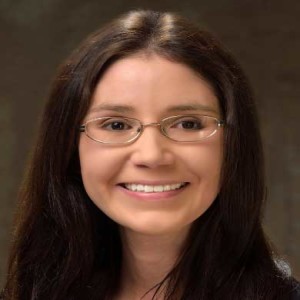
The winners of the 2022 APS Spence Award represent some of the brightest and most innovative young psychological scientists in the world. In a series of mini-episodes, Under the Cortex talks with each winner about their research and goals.
Today we hear from Antonia Kaczkurkin (Vanderbilt University) who is researching the neurobiological mechanisms of how we internalize disorders.

Mar 9, 2022
Mar 9, 2022
13 min
There are hundreds of billions of stars in our galaxy, though only about 5,000 are visible to the naked eye. Under ideal conditions and far from city lights, you can see about half of them on any given night. Cultures the world over see similar shapes in the night sky--the Big Dipper, Orion, and the Pleiades are just a few. New research, as discussed by Charles Kemp and published in the journal Psychological Science, reveals that our visual processing system may explain the striking commonality of constellations across cultures. Read the transcript here.
Image credit: Milky Way from the Atacama Desert by Derek Demeter
Feb 23, 2022
Feb 23, 2022
18 min
During the pandemic and when other natural disasters strike, governments may curtail certain liberties in an effort to save lives. These compromises also happen in everyday life, from seatbelt laws to food-safety regulations. A paper published in Perspectives on Psychological Science, however, suggests that restricting freedoms may have other unintended negative consequences for behavior and health. One of the authors, Nathan Cheek with Princeton University, explains how there may be a balance that can be achieved and how psychological science could help policymakers promote public health, safety, and well-being in times of crisis.
To read the transcript, see here.
Feb 2, 2022
Feb 2, 2022
16 min
You hear them so often they must be true! Or are they? Popular myths about the human brain include old chestnuts like people only use 10% of their brains, too much sugar sends kids into hyperdrive, and there are left-brain and right-brain personalities.
How did these beliefs get started and why are they so widespread? Charles Blue and Ludmila Nunes take a skeptical deep dive to explore some the most common myths about psychological science and the brain.
These are just some of the facts and debunking you'll find on the Association for Psychological Science's Myths and Misinformation Research Topic page.