244.5K
Downloads
152
Episodes
The podcast of the Association for Psychological Science. What does science tell us about the way we think, behave, and learn about the world around us? Under the Cortex is proudly sponsored by Macmillan Learning Psychology, where captivating content meets genuine engagement. Our authors, who are seasoned educators, understand today’s teaching challenges. We aim to craft and present both information and interactive tools that truly connect with students. Whether in-person or online, we support instructors and inspire students. Macmillan Learning Psychology: Engaging Every Student, Supporting Every Instructor, Setting New Standards for Teaching and Learning.
Episodes
Jan 25, 2024
Jan 25, 2024
22 min
In this episode, Under the Cortex hosts Jeremy Foust from Kent State University about his new paper in Perspectives on Psychological Science titled “Information Avoidance: Past Perspectives and Future Directions.” The conversation with APS’s Özge G. Fischer-Baum starts with defining information avoidance and then explores some of the factors that impact whether someone will choose to avoid information. Foust and Fischer-Baum also dive into me-search and how social media has or has not impacted the ways we take in information.
If you want to know more about this research, visit psychologicalscience.org.

Jan 11, 2024
Jan 11, 2024
18 min
How do parents adjust their behavior in the context of neurodiversity?
Under the Cortex features Alexandra Sullivan (University of California, San Francisco), a psychological scientist who studies the link between parenting and developmental delays. In this episode, Sullivan and APS’s Özge G. Fischer-Baum discuss parenting strategies with an inclusive approach.
Sullivan also recently published an article on this topic in APS’s journal Psychological Science.
If you want to know more about this research, visit psychologicalscience.org.

Dec 28, 2023
Dec 28, 2023
20 min
Attachment is a recent popular topic that has entered the public eye, but psychological researchers have been investigating attachment patterns for decades. What is the relationship between early attachment personality disorders? Is there an overlap?
APS’s journal Clinical Psychological Science features an article with a new perspective into how attachment style can be linked to personality disorders. In this episode of Under the Cortex, the two psychological scientists who wrote the article, Madison Smith from Northwestern University and Susan South from Purdue University talk with Özge Gürcanlı Fischer Baum about the role of early relationships in shaping one’s personality by addressing the undeniable need of forming attachment with loved ones. The conversation starts with Smith’s academic journey into linking the fields of attachment and personality science. The researchers also highlight the fact that attachment researchers and personality disorder experts do not typically talk to each other, but this research provides an opportunity to reduce this gap.

Dec 14, 2023
Dec 14, 2023
25 min
What goes viral social media and why? Do people value information-based content less favorably than misinformation? Why do we click more on polarizing content than neutral information?
In this episode, Under the Cortex hosts Dr. Steven Rathje from New York University. Rathje’s research explores what people think about social media content and what motivates their online behavior.
Rathje and APS’s Özge G. Fischer-Baum explore the implications for societal change, in-group and out-group behavior, and emotional choices on internet usage.
If you want to know more about this research, visit psychologicalscience.org.

Nov 30, 2023
Nov 30, 2023
27 min
Under the Cortex biweekly hosts authors of peer-reviewed articles. In this week’s episode, we do things a little differently, take a step back, and explore what happens on the editorial side of scientific publishing.
Simine Vazire, the incoming Editor-in-Chief of APS’s journal Psychological Science, joined Özge Gürcanlı Fischer Baum to discuss her plans to further advance the practices of inclusivity in APS’s flagship journal, she highlighted the current disadvantages in academic publishing in general and said that APS is a leader in supporting psychological scientists. The conversation evolved into topics of writing in English as a borrowed language, hidden curriculum in publishing and constructive practices such as pre-registration and reporting conflict of interest.
Nov 16, 2023
Nov 16, 2023
15 min
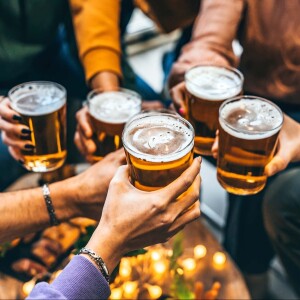
What is risky drinking? What’s the cognitive profile of risky drinkers? If we know more about how risky drinkers think, is it easier to develop models for preventive measures?
APS’s Özge G. Fischer Baum approaches these questions with a cognitive lens in an interview with Elizabeth Goldfarb from Yale University. Fischer Baum and Goldfarb discuss how risky drinkers generalize and overgeneralize categories differently from the general population. The conversation evolves into ideas about possible interventions for alcohol-use and other substance abuse.
Goldfarb also published on this topic in APS’s flagship journal, Psychological Science.
If you want to know more about this research, visit psychologicalscience.org.
Nov 2, 2023
Nov 2, 2023
21 min
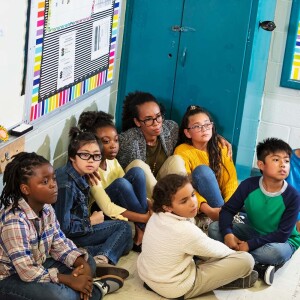
How does gun violence affect the youth? What are the developmental outcomes of being exposed to gun violence? Do lockdown drills provide a solution, or do they further create anxiety for children?
In this episode, Under the Cortex hosts Dr. Amanda Nickerson, University at Buffalo, The State University of New York. She highlights the developmental pathways and risk factors for being exposed to gun-related violence. Lockdown drills are on the table for discussion and Nickerson’s research does not find a direct link between the drills and anxiety.
Nickerson also talked about this topic in APS’s new webinar series Science for Society organized by Özge G. Fischer-Baum. For more information, check out the webinar on Gun Violence and Anxiety at https://www.psychologicalscience.org/news/2023-september-gun-violence-webinar.html.

Oct 19, 2023
Oct 19, 2023
23 min
Also check out a related news release on Bridgland’s article at psychologicalscience.org.
Oct 5, 2023
Oct 5, 2023
11 min
Is it true that you are only as old as you feel? Is age really just a number? Is 40 the new 30?
In this episode, Under the Cortex hosts Markus Wettstein of Humboldt University of Berlin. Wettstein’s research explores the perception of subjective age in adulthood and gender, as well as generational differences in feeling young.
The conversation with APS’s Özge G. Fischer-Baum evolves into implications for health benefits, general well-being, and possible cross-cultural differences. Wettstein also published on this topic in APS’s flagship journal, Psychological Science. The article is titled Younger Than Ever? Subjective Age is Becoming Younger and Remains More Stable in Middle-Age and Older Adults Today.
Sep 21, 2023
Sep 21, 2023
27 min
Does our geographical location shape our thinking? Does water access have an effect on our decision-making habits? Do we choose to live in the moment because of environmental factors?
In this episode, Under the Cortex hosts Dr. Hamid Harati, The University of Queensland, and Thomas Talhelm,University of Chicago. Through their international collaboration, the two scholars explore how our ecological environment can shape our decision-making skills. As they compare two cities in Iran, Yazd and Shiraz, they ask how cultures form based on environmental needs and how water scarcity can be a strong influencer of long-term orientation in basic life decisions. The conversation with APS’s Özge G. Fischer-Baum evolves into implications for climate change and the value of water as a monetary object.
Harati and Talhelm also published on this topic in APS’s flagship journal, Psychological Science. Their article is titled Cultures in Water-Scarce Environments Are More Long-Term Oriented. The authors encourage scholars from across the globe to reach out to further explore these questions in future collaborations.
Also check out Harati and Talhelm’s related feature in the 2023 September/October issue of the APS Observer at https://www.psychologicalscience.org/observer/how-climate-shapes-us.