244.6K
Downloads
152
Episodes
The podcast of the Association for Psychological Science. What does science tell us about the way we think, behave, and learn about the world around us? Under the Cortex is proudly sponsored by Macmillan Learning Psychology, where captivating content meets genuine engagement. Our authors, who are seasoned educators, understand today’s teaching challenges. We aim to craft and present both information and interactive tools that truly connect with students. Whether in-person or online, we support instructors and inspire students. Macmillan Learning Psychology: Engaging Every Student, Supporting Every Instructor, Setting New Standards for Teaching and Learning.
Episodes

Jan 18, 2021
Jan 18, 2021
15 min
Health behaviors and emotional stressors can alter the body’s ability to develop an immune response to vaccines, including—potentially—the new COVID-19 vaccines. Simple interventions, including exercising and getting a good night’s sleep in the 24 hours before vaccination, may maximize the vaccine’s initial effectiveness. We interview Annelise Madison of The Ohio State University about a recently accepted paper in Perspectives on Psychological Science explaining the mind-body connection and the COVID-19 vaccine.
Jan 11, 2021
Jan 11, 2021
21 min
What happens when the APS media relations director chats with the APS senior science writer? A fun discussion on 2020's most interesting research, that's what!
Many of the major news stories of 2020 were closely tied to understanding human behavior, including efforts to contain the spread of COVID-19, understand political divides and social conflicts, and address enduring racial disparities and inequality.
A wealth of research published by the Association for Psychological Science (APS) addresses these and other important topics. The following is a selection of some of APS’s most newsworthy research and highly cited publications from 2020. These stories emphasize the importance of peer-reviewed psychological research and its impact on society. Read the full list here: https://www.psychologicalscience.org/news/releases/breakthroughs-and-discoveries-in-psychological-science-2020-year-in-review.html
Jan 7, 2021
Jan 7, 2021
22 min
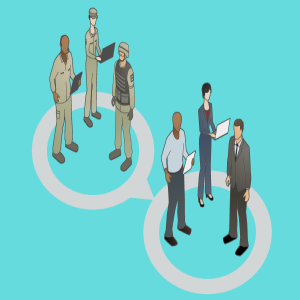
Long-standing structural features of the military have created a culture and society that is dramatically different and disconnected from civilian society. Thus, veterans transitioning to civilian society face a number of challenges related to fulfilling basic psychological needs. To explore this issue in detail APS's Charles Blue interviews Steven Shepherd and David Sherman about their recently published paper "The Challenges of Military Veterans in Their Transition to the Workplace: A Call for Integrating Basic and Applied Psychological Science."
Jan 4, 2021
Jan 4, 2021
22 min
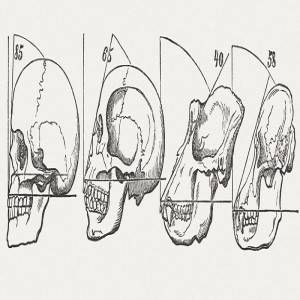
Dr. Frans B. M. de Waal is a Dutch/American biologist and primatologist known for his work on the behavior and social intelligence of primates. His latest research concerns empathy and cooperation, inequity aversion and social cognition in chimpanzees, bonobos, and other species. In a discussion with APS's Charles Blue, Frans explores the connection between primatology and psychology and how they intersect on issues of culture and behavior.
Dec 1, 2020
Dec 1, 2020
30 min
Of all the major events in 2020, one that has spurred positive action and will hopefully catalyze meaningful change has been the protests and demonstrations related to Black Lives Matter. Psychological science has a great deal to tell us about racism and discrimination in our society. This includes studies of the pernicious nature of systemic biases in the workplace, in our legal system, and across cultures. To help explore these issues, APS's Charles Blue speaks with social psychologist and cultural diversity scholar Dr. James Jones of the University of Delaware.
Nov 19, 2020
Nov 19, 2020
22 min
Unwanted memories can intrude on our thoughts from time to time, but new research suggests that a lack of sleep can greatly impair our ability to suppress these unpleasant and unwanted thoughts. Researcher Scott Cairney from the University of York in the UK helps us understand the role of sleep disturbance in guarding against these intrusive thoughts.
"Losing Control: Sleep Deprivation Impairs the Suppression of Unwanted Thoughts," Clinical Psychological Science, https://doi.org/10.1177/2167702620951511
Nov 12, 2020
Nov 12, 2020
23 min
In September 2020, APS published the first-ever gender parity review of psychological science: "The Future of Women in Psychological Science." The story behind this study, as told by some of the authors, is a compelling examination of personal experiences and observations. Through these discussions, a consensus emerges: Gender gaps for women in psychological science are closing, yet some remain, and more work is needed.
Participants include: Junie Burke, APS (interviewer); June Gruber, Univ. Colorado; Jane Mendle, Cornell Univ.; Kristen Lindquist, UNC, Chapel Hill; Toni Schmader, Univ. British Columbia; Adrienne R. Carter-Sowell, Texas A&M Univ., and Eliza Bliss-Moreau, Univ. California, Davis.

Oct 26, 2020
Oct 26, 2020
18 min
Haunted houses, horror movies, and ghost stories can provoke chilling delights, provided the fear they evoke remains in a “Goldilocks zone” that is neither too terrifying nor too tame. New research connects this sweet spot of recreational fear to a telltale range of heartrate fluctuations, shedding light on the mind-body connection between fear and fun.
Sep 30, 2020
Sep 30, 2020
28 min
As the world rapidly approaches the one-year anniversary of the coronavirus pandemic, the human impacts continue to mount. Exploring what this means from the perspective of psychological science, Charles Blue with the APS interviews Robert Roy Britt, a journalist and former editor-in-chief of Live Science; Wendy Wood, Provost Professor of Psychology and Business at the University of Southern California; and, APS President Shinobu Kitayama, the Robert B. Zajonc Collegiate Professor of Psychology at the University of Michigan.
Sep 29, 2020
Sep 29, 2020
15 min
A new study published in the journal Perspectives on Psychological Science reanalyzed the data potentially linking video games to aggression in children and found little if any correlation between the two. Lead author Christopher Ferguson of Stetson University talks with APS's Charles Blue on the history and plausibility of connecting violent video games with aggressive outcomes in children.